This whisky, the Dalmore King Alexander III (KA III forthwith) was a gift, and I am grateful for it. Especially as this retailed for over $300 when our local stocked it (it’s a state-owned store and they rotate brands, it is gone now). That price is definitely out of my ‘I’ll try it on a whim’ range. One wonders at the price, especially for a NAS whisky. What are we buying? There is a fancy box, as you can see (bottom of post), and all those flaps provide lots of inspiring verbiage:
A note on the box art, The Death of the Stag, a fine painting at the Scottish National Galleries (I saw it, an impressive painting indeed) on the right inner flap.
A note about the Dalmore Custodians, their loyalty program on the left inner flap.
Dalmore history, Dalmore’s general approach to marrying spirit, and KA III tasting notes (box rear).
So what does Dalmore bring to the party? Does this hyped-up NAS hold up?
Known alternately as Scottish Barley and The Classic Laddie, this expression from craft-distiller Bruichladdich is a NAS whisky.
I have to admit a fondness for the place after having visited; I like their style. It was our last day on Islay, and after a busy morning walking from Port Ellen to Ardbeg (more on that later!) we decided to head out into the hinterlands for a drive. We took the road out to Port Charlotte, a tiny village at the end of which the A847 went from two lanes to one. That was all for me, I had had a bellyful of driving on tiny little roads and we headed back the way we came. Portnahaven would wait for next trip!
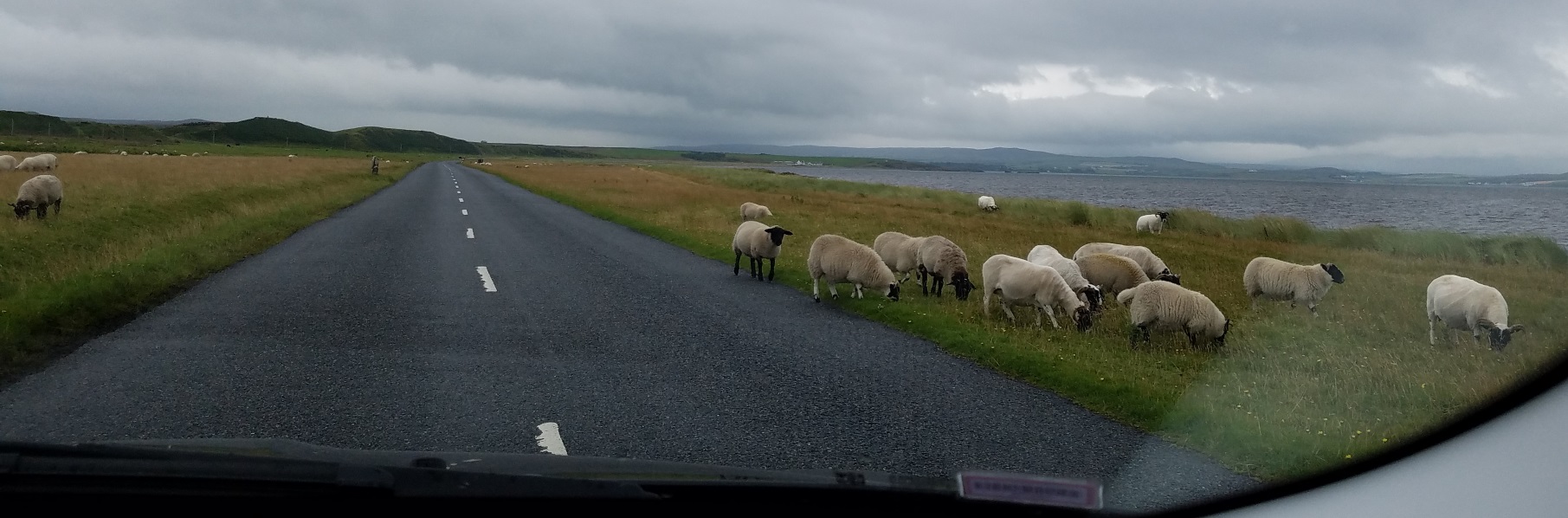
On the way back, we dropped by Bruichladdich. The distillery had been enthusiastically recommended to us by ‘Uncle Charlie,’ our taxi driver for the Bunnahabhain/Caol Isla visits (more on that later as well). I unfortunately was tired of photography so I have no photos, sad to say. Except this one, of some local creatures which had just scurried out of our way:
What, they think they own the road?Just a dram, please.
It’s an interesting little place, a whitewashed structure and wall, through which you pass into an intimate little courtyard to park. The tasting room is through a brightly painted (turquoise) door, low-ceilinged, liberally provided with couches on which whisky overs lounged in quiet repose. There was the usual display of t-shirts, jackets and the like, and a wide bar where a kindly woman of mature years welcomed us gaily and immediately offered us a taste. Why, of course, why not? I expected the usual: “Here’s our standard, if you want more sign up for a tour.” But she led us energetically through tastings of four expressions (of which I took the tiniest sips, as I was still driving, grr.) We had the Classic Laddie, the Islay Barley (both unpeated), the Port Charlotte and Octomore (latter two peated). Note: though I growl about NAS whiskies, these all lacked an age statement and yet I enjoyed them all.
Sure NAS whiskies get flack from whisky lovers. We consider the age statement a definitive mark of quality, care, and investment by the distiller. The distillers will come back at us with arguments that ‘no age statement’ expressions give them the freedom to pick the best casks, etc. But I have to think, if we as consumers roll over and accept this, we’ll be on the road to what wine has become. Manufactured. And there will be apologists for manufactured whisky as there are apologists for manufactured wine. Take the article in the New York Times by Bianca Bosker just last March. When I read it I was certain, until it concluded, that the piece was a tongue in cheek sendup. I mean, oak dust? Liquid oak tannin ‘(pick between “mocha” and “vanilla”)’ — really? Ms. Bosker promoted the idea that we should accept products designed by committee for easy drinking palates, further straining credulity. I do not exaggerate:
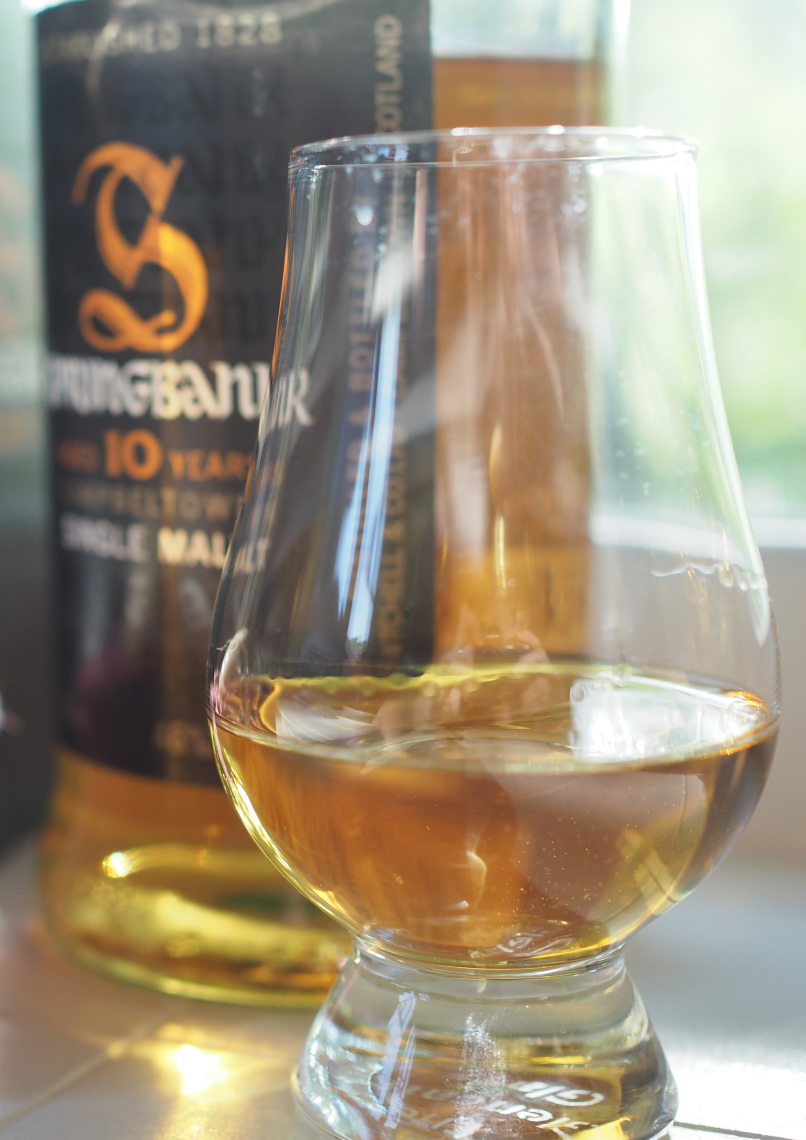
The Springbank website crawler hint says “Springbank is a unique Campbelltown distillery” and this is no mere marketing. Read on.
I’ve really looked forward to trying this malt. I had to afford it first, it’s pricey ($78 in Oregon). But as “the only Scottish distillery to complete 100% of the production process on site” (link) and their claim that Springbank 10 is distilled ‘two and a half times’ — I had to know, how much magic resulted?
Honest coloring
I’ve had a bottle of Springbank on my desk for three months. And just a week or so ago, I found myself within an hours’ drive of the distillery. My wife and I were returning from three glorious days on Islay, and had to get all the way to Glasgow, turn the car in by 6, and catch a train. The thought of taking a few more hours out of an already hectic day seemed daunting, and in retrospect, I’m glad we passed Springbank by. It would have been too much for one day, and it gives me a reason to return to that corner of Scotland (besides the wonderful people).
Laphroaig’s Quarter Cask is actually a bit lighter in color than in this shot (another cloudy day in Portland).
We’re still on Island expressions, and time to address a No Age Statement offering from Laphroaig: the Quarter Cask. A quarter cask is a cask one quarter the capacity of a hogshead. More specifically, a sherry butt (500 liters). The Laphroaig folks use a 125 liter cask, which gives, compared the their normal casks, a 30% greater cask (interior) surface area for a given volume of whisky. A higher whisky-to-oak ratio.
That ratio, it is presumed, allows the goodness of the charred oak to infuse more quickly with the spirit, rendering a quicker maturation. They also point out that the surface-to-spirit ratio also increases the ‘Angel’s share’ of alcohol which evaporates out of the oak. True enough, and that evaporation is displaced with good sea air, of which Laphroaig distillery has plenty. In the end, this is a gambit to allow the whisky master to create a whisky with the balance and sophistication of a fully (e.g., 10 or 12-year) matured whisky with spirit what hasn’t aged as long. Alchemy, I say! Can you get gold from lead (well, without a nuclear reactor)?




 AlbinoTree.Net: Whisky (and book) reviews