Reflections on Non-Age Statement Scotch Whiskies

This post will appeal best to those who read The Economist. If that’s not you, this entry will appear rather wonkish; you might want to skip to the bottom for the summary of tested expressions.

Why NAS?
NAS as a concept has taken the industry by storm in the last five years. This trend is driven by two factors: a restriction in supply of aged whisky used in traditional expressions and increased demand in the Far East (backstopped by continuing popularity in the West). And unlike other products, the supply of suitably aged whisky is restrained in an insurmountable way: there is no way to go back in time and put more whisky in barrels.

The supply and demand interaction has two facets: if the distillers don’t react to higher demand with higher volume, the inevitable result is higher prices for their product and customer discontent; secondly, if the distillers fail to capture their share of the growing market, they risk losing market share to rivals.

Continue reading “Reflections on Non-Age Statement Scotch Whiskies”
Whisky and Words Number 34: Glenmorangie Astar

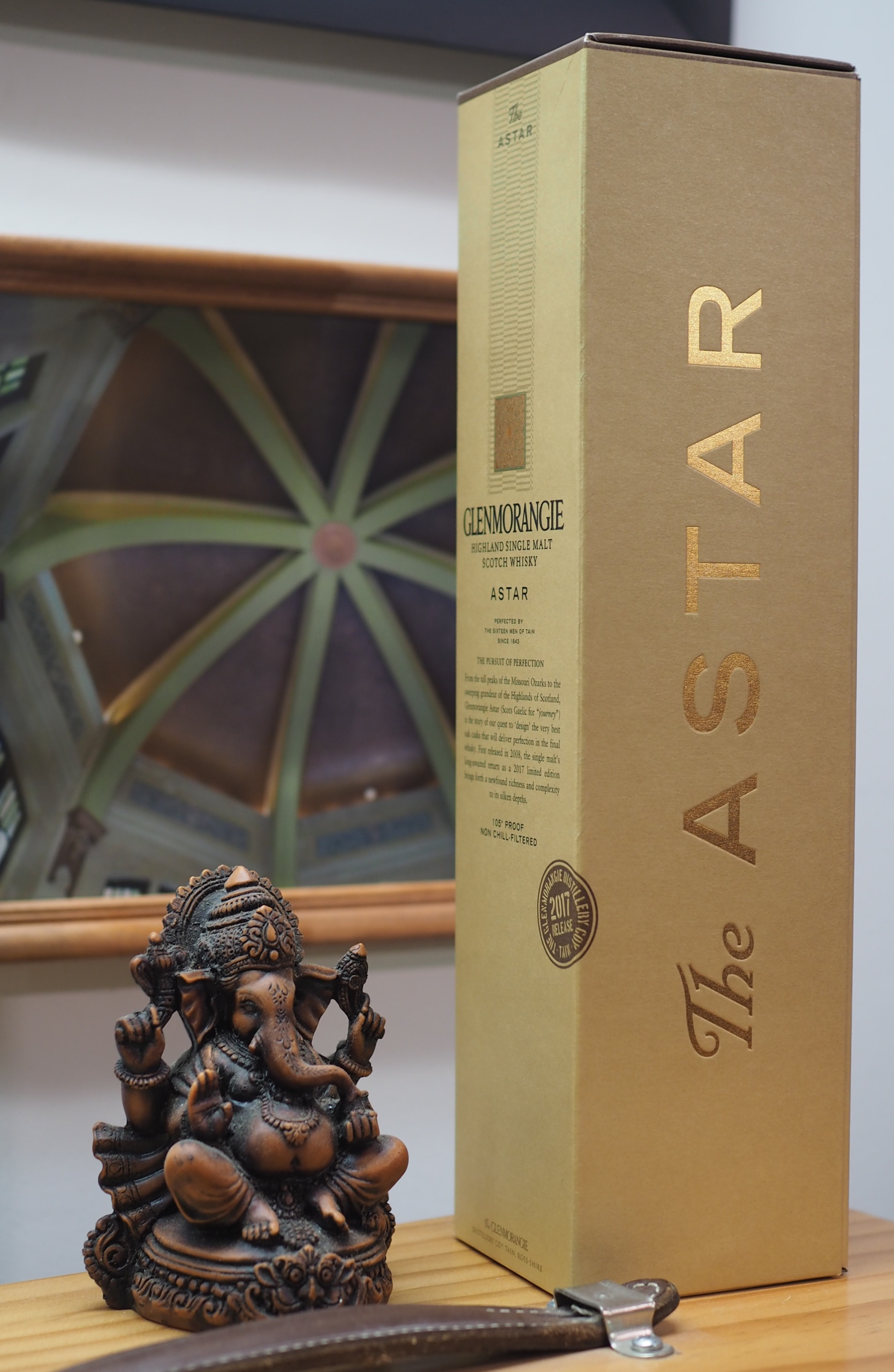
I thought ‘Astar’ sounded Far Eastern, so paired this one up with Ganesha.

I have my wife to thank for the Astar. She had spotted an unpeated Caol Ila she wanted to try. We went to the local shop together and spotted Astar. We both like Glenmorangie’s offerings – they are reliably well done, balanced and focused. Their 10-year is a standard for us and what I serve guests who want to try a single malt for the first time. We have had tastings with the sherry, port and sauterne finished versions and they were well received. I also have a bottle of the ‘very rare’ 18-year old, which is some serious whisky. At $115 locally, it should be.

The Astar is nearly as expensive at $99.95 and caught the good wife’s eye. If regular Glenmorangie was good, she reasoned, this expression, aged in barrels crafted with select woods, must be better. I was a bit more skeptical, noting the absence of an age statement. But given the malt master at Glenmorangie has produced so many good offerings, I relented and we decided to give it a go.

Continue reading “Whisky and Words Number 34: Glenmorangie Astar”

Whisky and Words Number 33: Two Pips of Jura

The Paps of Jura. Click for hi-res.

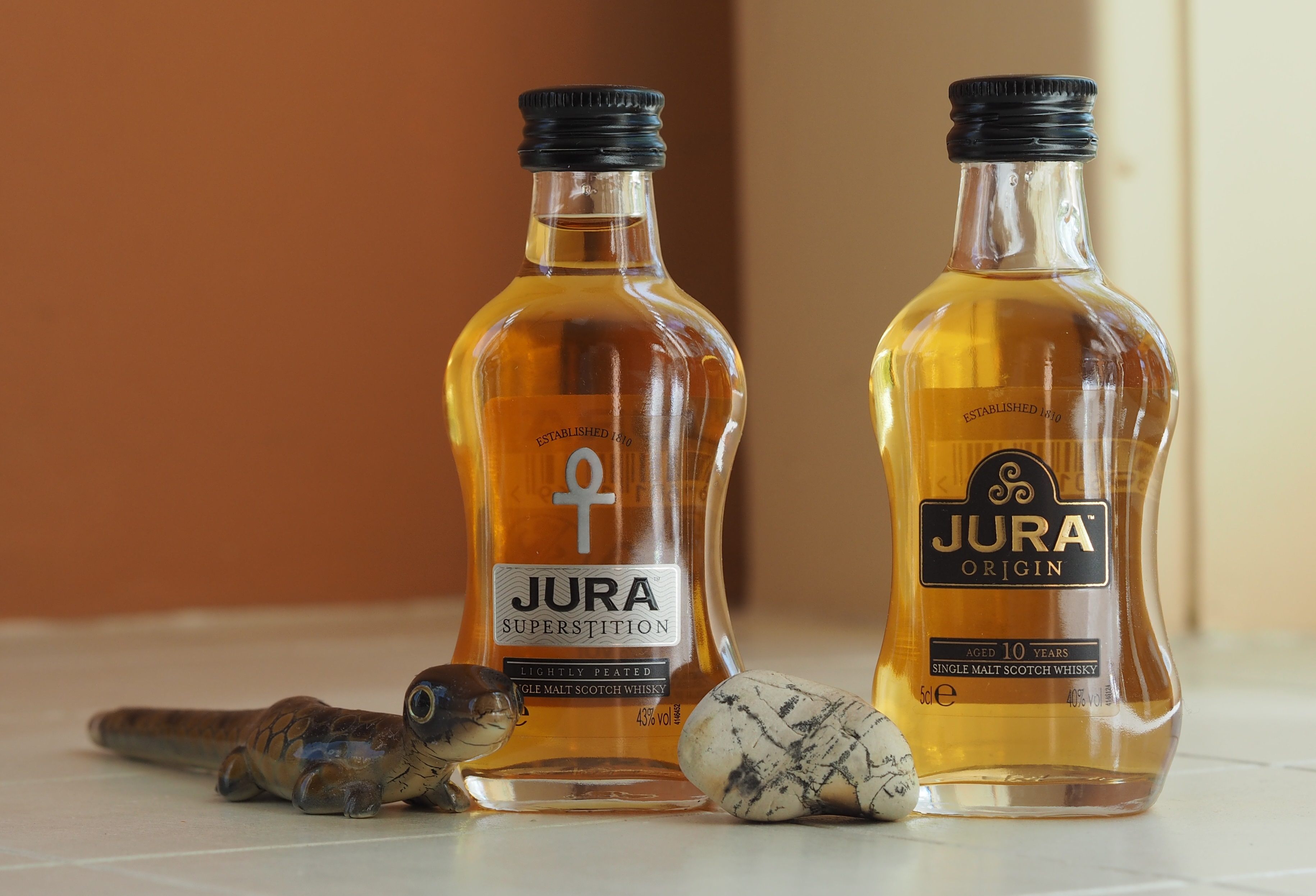
I laid eyes on the Isle of Jura for the first time last year on my trip to Islay. From the Bunnahabhain distillery, our driver, Uncle Charlie, pointed out ‘the Paps of Jura,’ two mountains rearing up from the southern lobe of that island. (The shot at left is from Caol Isla distillery, just to the south of Bunnahabhain.) We did not make it to the island, nor try the whisky while we were there, but we bought a couple tasters in a whisky shop in Edinburgh. And they are what you see below.

Jura Superstition (NAS) left, and Origin 10

This review will be a microcosm of the NAS vs. ‘standard’ 10 or 12-year old debate — whether the Non-age-statement whiskies represent a good value and experience for the whisky taster.  (Note, both of these whiskies are listed as limited release.)

Continue reading “Whisky and Words Number 33: Two Pips of Jura”

Whisky and Words Number 32: Oban 14

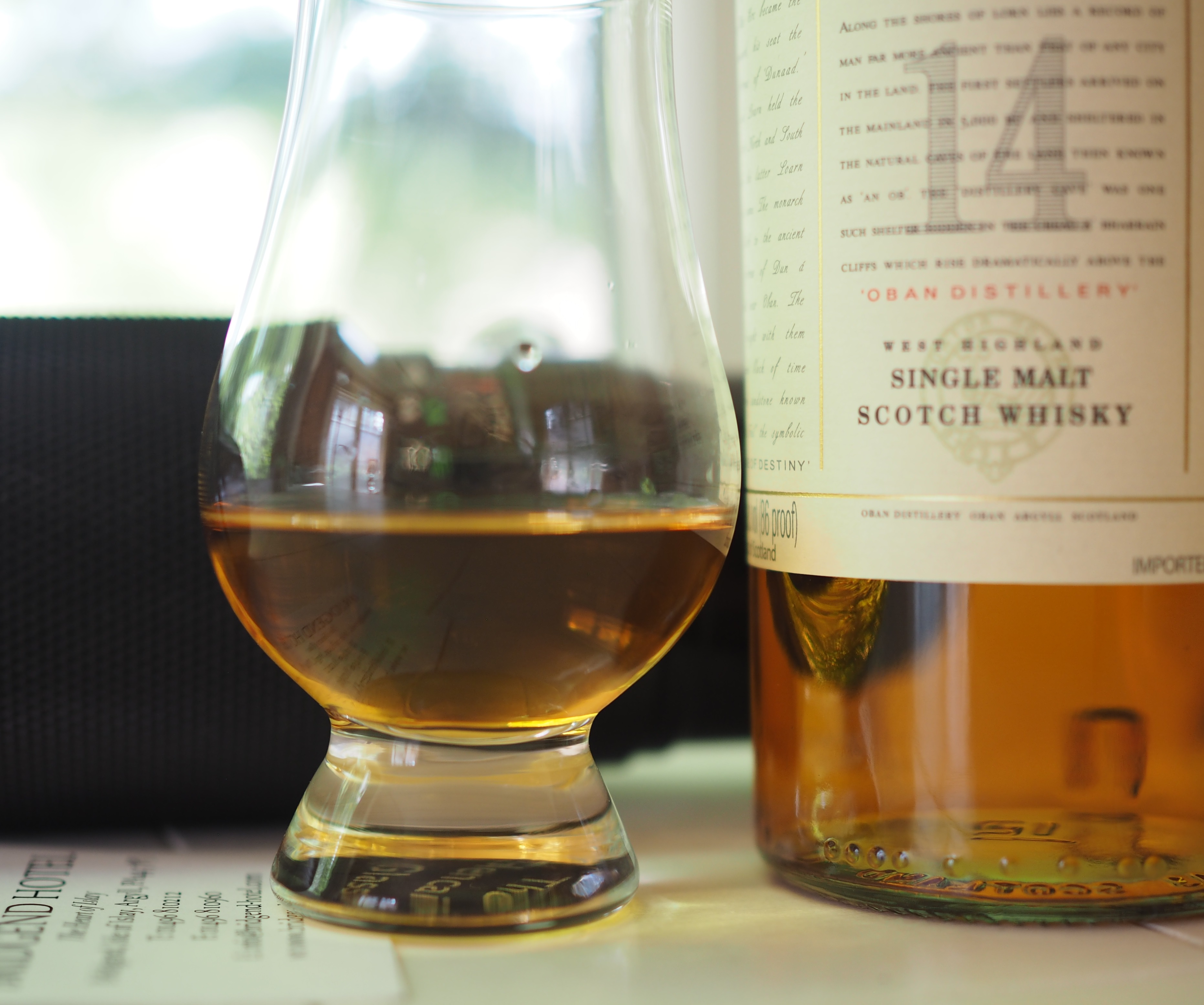
A dram of the good stuff.

Oban distillery is a petite operation by Scottish standards. Comprising only two stills, their output is listed on Wikipedia at 670,000 barrels a year. That’s about half the rate of Ardbeg, itself a distillery of modest output. With such limited production, Oban concentrate on their 14-year old, though there is a Distiller’s edition and some older releases.

Continue reading “Whisky and Words Number 32: Oban 14”

Whisky and Words Number 31: Ardbeg Corryvreckan

This is the final post in the NAS series for now. I’ll write up a wrap-up article in a week or two.

Ardbeg, pretty spiff place.

I read about Ardbeg long before I had a chance to taste it. A distillery raised from the dead, so to speak, it had been shuttered for eight years in the 1980s. Production resumed slowly under a caretaker administration by Hiram Walker in the early 1990s. Glenmorangie bought it in ’97 and resurrected Ardbeg to full production. Blessed with great stocks of old whisky aging in the warehouse, they released notoriously good (and peaty) whiskies throughout the early 2000s. They presented Ardbeg in a craft style – no coloring, non-chill-filtered, higher ABV. Their 10-year is released at 46%, and it is a damn good whisky, as I reviewed here. Despite relatively low production, about 1.25 million liters a year, they have a number of expressions.

Continue reading “Whisky and Words Number 31: Ardbeg Corryvreckan”