Whisky and Words: Island Malts

The blog has covered a number of blends, and also eleven unpeated, mostly sherry-finished single-malts (see sidebar for the list and links). They all share similar influences in their flavoring.

It’s the water, and a lot more
https://en.wikipedia.org/wiki/en:_User:Stephan_Schulz
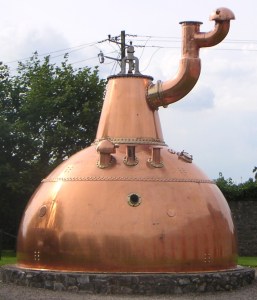
Jameson still, Cork (Photo: Stephan Schulz)

Some of those malts, Bunnahabhain* and Glenfarclas, for example, are notable for the taste of what the French would call terroir. Peat bogs, soil and rocks through which their water sources run flavor that water. In addition to the water, the spirit’s flavor is heavily influenced by the ingredients (mostly barley malt) and how they are treated at each step. In the preparation of what will become new make spirit, there is much attention to manipulating temperatures at each stage. The temperature of the wort is chosen to enhance the activities of enzymes converting sugars and later, to encourage fermentation. Variation in stages and their temperatures can affect flavor. One also reads of claims that the shape and composition of tuns, stills and washbacks will influence the flavor of the new-make spirit. Once distilled, the spirit meets the cask, where interaction with the oak (and its preparation, be it lightly toasted or charred) will have the second largest effect on flavor.
Continue reading “Whisky and Words: Island Malts”

Whisky and Words Number 16: The Balvenie Doublewood 12

A tale of two Grants
Balvenie's DoubleWood 12-year-old is tastefully presented.
Balvenie’s DoubleWood 12-year-old is tastefully presented.

The distance from J&G Grant’s Glenfarclas distillery to William Grant & Sons’ Balvenie location is but 13 miles by road; it’s a much shorter distance by helicopter. Both are Speyside distillers, and both offer whiskies finished in sherry casks. Like J&G Grant, William Grant & Sons is an independent company. Both started in the 19th century: William laid down his distillery in 1889 (finished in 1892); John Grant of J&G Grant bought Glenfarclas distillery (built in 1836) in 1865.

However, the William Grant company has since grown into the largest independent distiller in Scotland. In fact, with over 10% market share, William Grant and Sons represents the third largest producer of Scotch, behind Diageo and Pernod Ricard. Not bad for a family company.

Continue reading “Whisky and Words Number 16: The Balvenie Doublewood 12”

Whisky and Words Number 15: Auchentoshan 12

Auchentoshan 12 – triple distilled, sherry finish. Nice color.

Well, here we are with yet another sherry-cask-finished whisky. But this is the last sherried whisky I review for a while, then we get into the smoky Island whiskies. (The Island whiskies are like crusty steamships entering the quiet mouth of the of Spey river with their stacks burning seaweed — threatening the genteel palates of the lowlands). But let’s address the 12-year-old expression of this distillery first.

Auchentoshan was founded in the early 1800s, but has been a holding of Beam Suntory since about 1994. The Suntory folks have let the distiller express their whiskies in their traditional way, and they’ve done well. Auchentoshan is most notable for the fact that alone among Scotch distilleries, they triple-distill the whisky, which is more the Irish approach. Rumor has it, it was Irishmen who founded the distillery, hence the style. Also, they have an informative web site with some nice details about how they make their whisky.

Continue reading “Whisky and Words Number 15: Auchentoshan 12”

Whisky and Words Number 14: Glenfarclas 17

As I wrote in the Glenfarclas 12 review, the J&G Grant company is singular in their transparency and focus on product, producing whisky and marketing materials which go light on glitz and heavy on information. I think their entry in scotchwhisky.com says it best:

The Grants’ philosophy is to present their single malts with minimum fuss in terms of packaging and at sensible prices. The aim is to get consumers drinking the whisky, even the really old bottlings, and then come back for more. Essentially, Glenfarclas is a whisky for drinkers rather than collectors.

Continue reading “Whisky and Words Number 14: Glenfarclas 17”

Whisky and Words Number 13: Glenfarclas 12

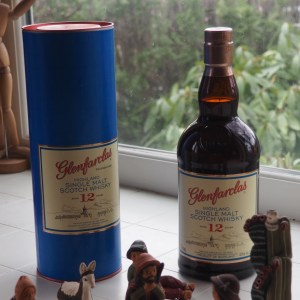
Glenfarclas 12. Unassuming packaging, excellent whisky.

I’m an engineer of sorts…I don’t hold an engineering degree but my entire post-military working life has been designing, writing, testing and explaining software and computer systems. There is a natural dynamic between the messaging folks (marketing) and the engineers. We techies like to know what’s what and make our own decisions. Marketing’s job is, as we see it, to spiff up, deflect, and entice. That might be fine for the hoi polloi, but we engineers like to think we’re immune to such blandishments.

Well, of course we aren’t, marketing is a powerful force and here to stay, but it sets my heart all aflutter to encounter a company like Glenfarclas. To say they are transparent about how they create their product would be an understatement. This starts at their website, which is professional but not the most visually stunning. It’s probably considered a couple years behind the times as far as design, yet I appreciate it for the amount of information they place at your fingertips. It is amazing. Furthermore, their brand ambassador manning the email trenches is similarly forthcoming (thank you, Myriam). This is a huge benefit to those of us who want to know just what it is we are drinking, how it is made, why it tastes as it does.

Continue reading “Whisky and Words Number 13: Glenfarclas 12”