While Glenmorangie (rhymes with ‘orange-y’) has a solid pedigree (see below) and great affirmation as “the most popular malt in Scotland” (according to DrinkBritain and others), they aren’t above a bit of marketing puffery. They boast “air-dried” bourbon casks. That’s good, as it’s difficult to dry casks underwater, for example. Though I suppose some new-age Gen-Z whisky maker will come out with vacuum-dried casks, just because they can. But no matter, what concerns this writer is the taste, and Glenmorangie is OK there.
I usually have a bottle of a Speyside or Highland in my rather cramped liquor cabinet for those gentler souls who prefer a whisky that’s milder than my usual suspects—all Island malts. I’ve always been a guy who liked BBQ, spicy Thai and Szechuan, hoppy beers–you get the idea. I go for big taste. So when I started engaging with whisky, I blew quickly through the Glenlivet and Glenfiddich 12-year offerings. They did not exactly turn on my taste buds, and for the cost ($50-ish a bottle where I live), that just was not going to cut it. My buds gravitated to the bigger, smokier and peatier tastes of the Island malts.
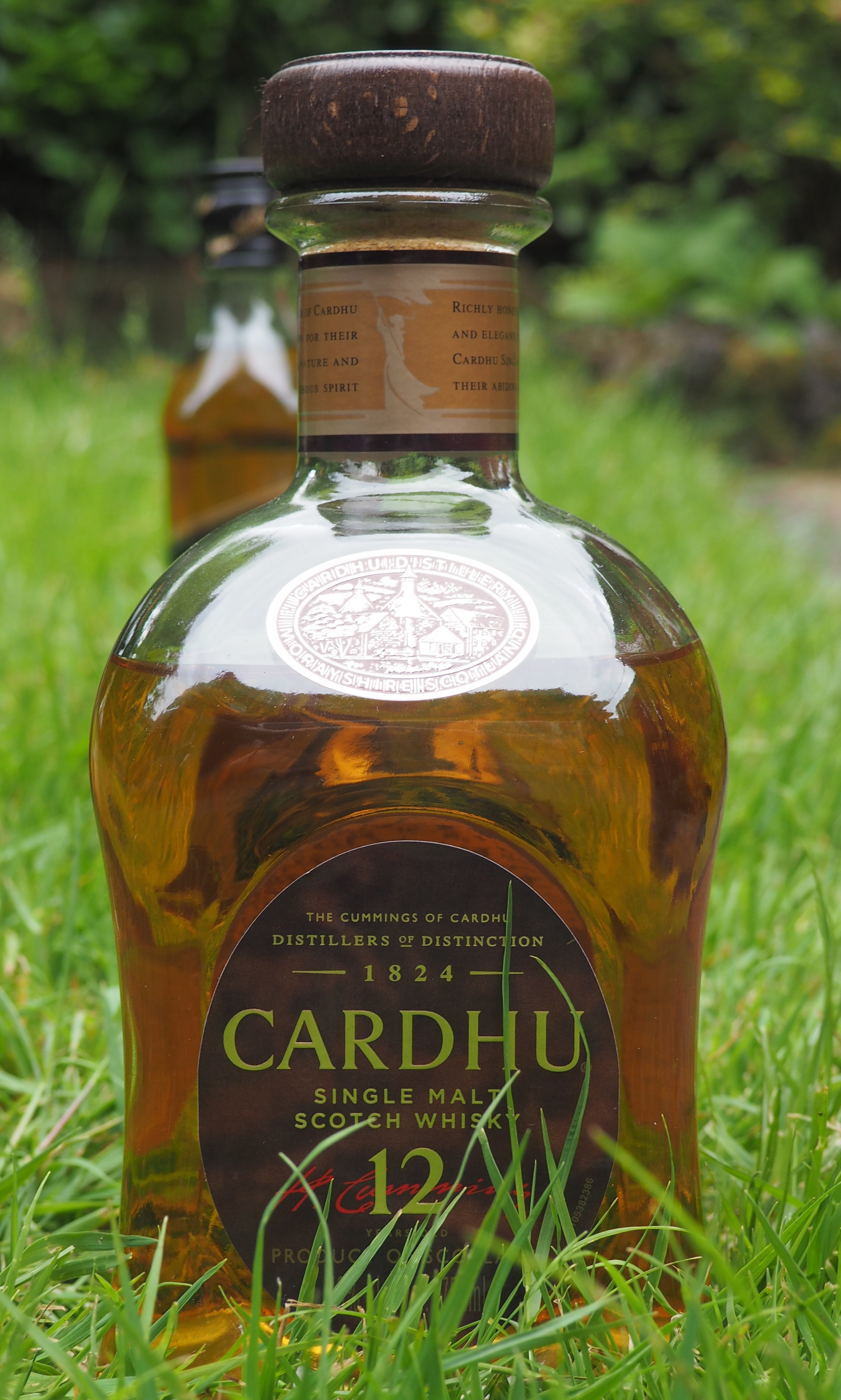
Cardhu – you can imagine a lush grassy field when tasting this whisky.
However, I recognize quality and consider The Macallan 12 a benchmark for well-made whisky. That’s a Speysider I keep around for guests who recoil at my Laphroaig and Ardbeg. When I’m in a calm mood I like a dram of the Mac and when I received a bottle of the Cardhu as a birthday gift this year, I was well impressed. This is crass of me to admit, but being a bit obsessed with cataloging my experiences, I checked out the price. About $42 locally, vs. mid $50 range for Macallan. A nice surprise.
When you see Aberlour’s A’Bunadh, it is quite obvious this is not your run-of-the-mill whisky: the deep tawny-red color is highlighted by a clear glass bottle, short with a high shoulder. The spirit is clear, and when backlighted has tones of polished oak, but when in shadow, the whisky looks like an alchemist’s reagent for making dragon blood. Or maybe it is dragon’s blood—it’s strong enough! Bottled typically around 60% (my bottling, #46, is at 60.4%), A’bunadh has enough kick to get anyone’s attention. This is a spirit to be approached with respect.
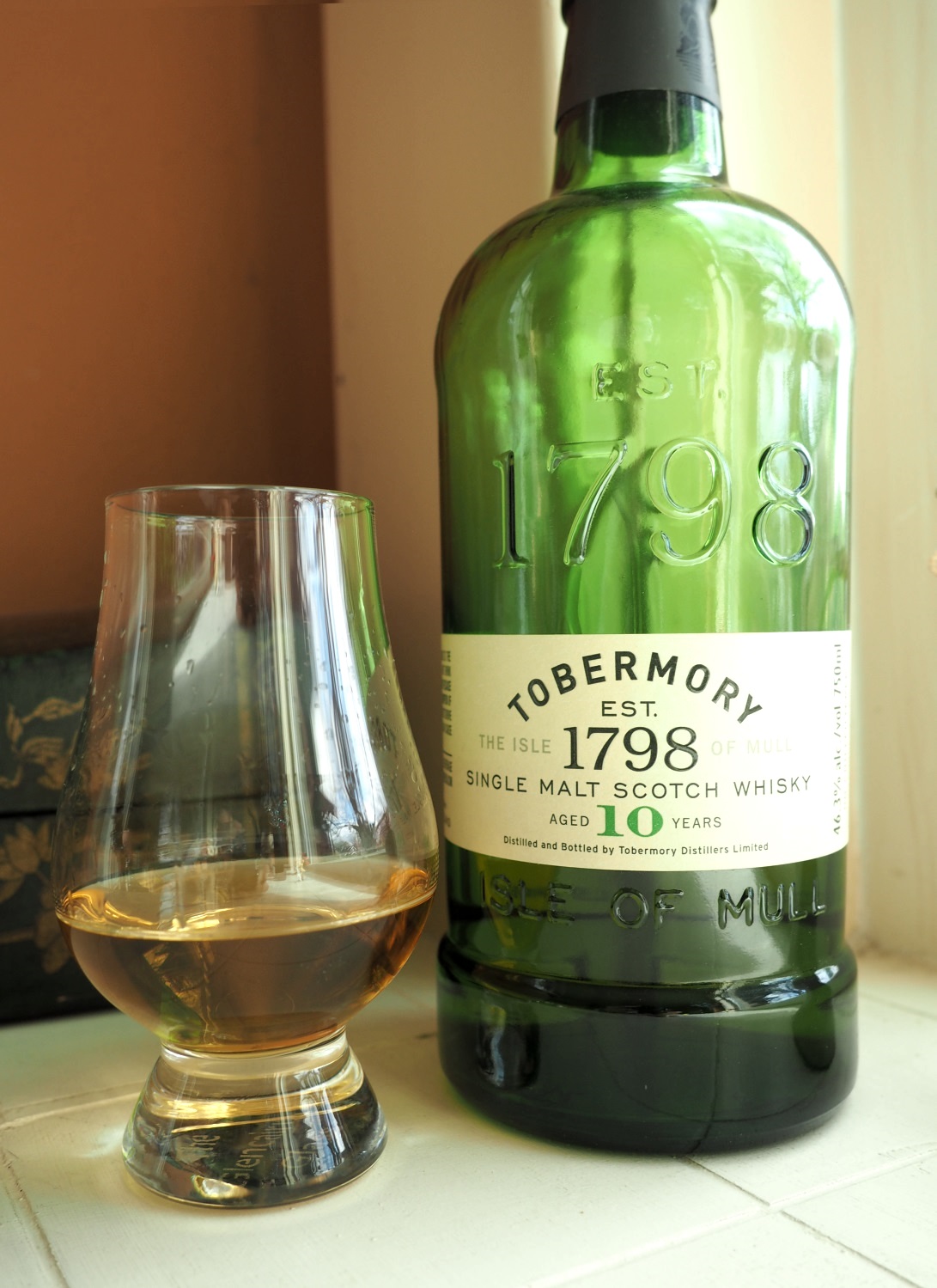
Tobermory is one of those was-mothballed, now-resuscitated distilleries which is now producing a high quality product. It’s considered an island distillery, being on the isle of Mull (north of Islay and Jura, south of Skye), but the style isn’t like what we think of as an island malt. It does not have the medicinal quality of a Talisker or Caol Ila, nor the peat of an Ardbeg, nor the smoke of a Laphroaig or Lagavulin. In fact, Tobermory reminds me of a Speyside or lowland malt (as we’ll see, this is no great surprise).




 AlbinoTree.Net: Whisky (and book) reviews